Get FREE Domestic Shipping On Orders Over $79.99!











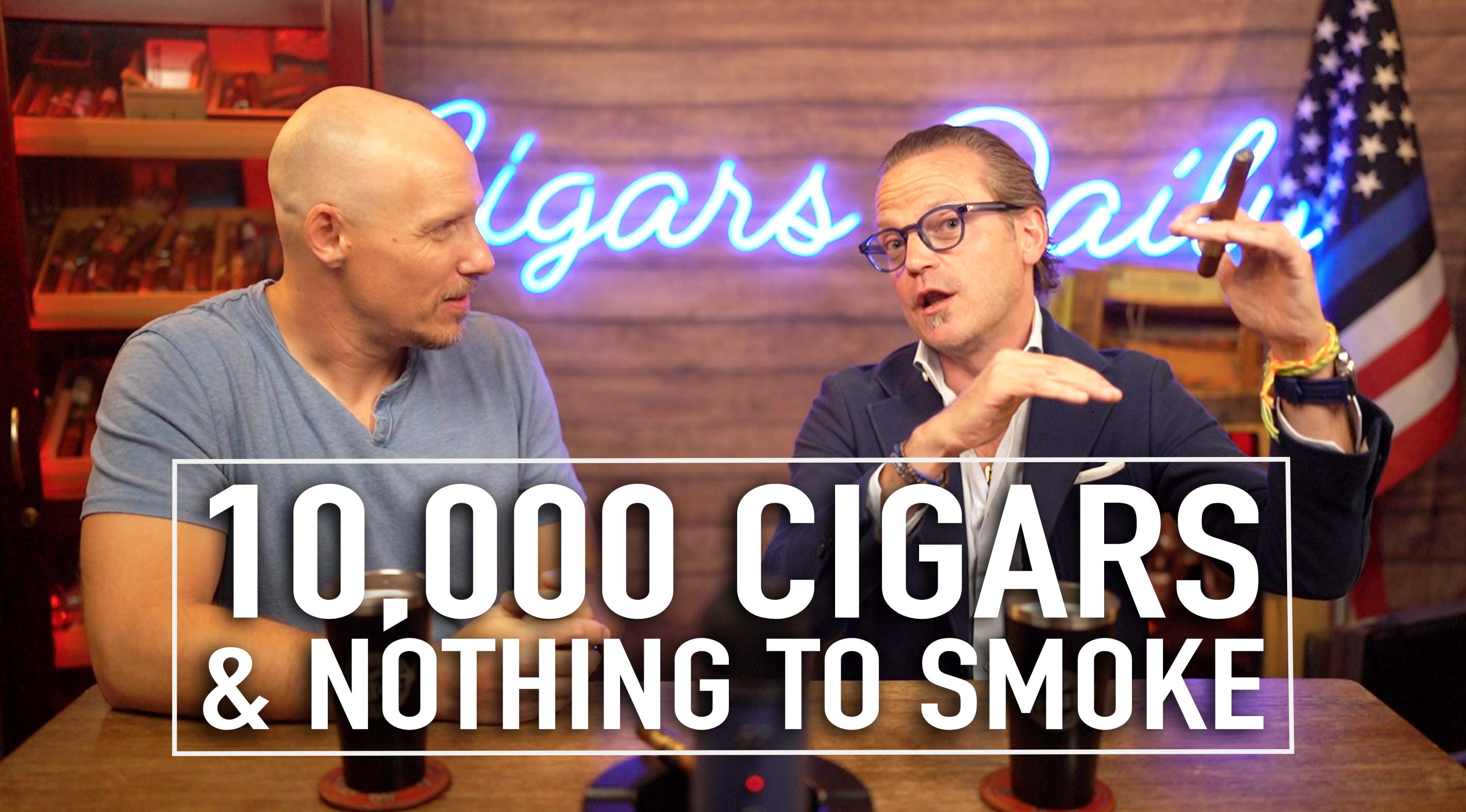
He Has 10,000 Cigars — And Barely Smokes Any of Them [EXTENDED VERSION]

A good cigar collection isn’t about hoarding rare, “ungettable” sticks — it’s about buying cigars you’ll actually smoke and attaching them to memories. For long-term aging, a sealed weather-tight tub with Boveda packs at just under 70% humidity beats most fancy setups. Age bold, full-bodied cigars (they have the most “runway” to improve); smoke mild Connecticut and shade-wrapped cigars fresh, since they only mellow from here. And whatever you do — smoke your best stuff before it ages past its prime.
I sat down with Michael Herklots of Ferio Tego, who’s been collecting cigars since 1998, to talk through how a real collection grows over 25-plus years — the mistakes, the setups, and the philosophy. Here’s what actually matters if you’re building one yourself.
What is a cigar collection actually for?
When most people start, they collect to fill. You buy cigars just to have them, you count them, you feel like a rich man looking at a full humidor. Nothing wrong with that — I did the exact same thing with bricks of 20 no-name sticks in a glass-top box. But the “why” evolves. Over time, the best collections stop being about inventory and start being about memories: a cigar someone gave you, a stick tied to a celebration, a blend you want to watch change over the years.
The trap? You save everything for a “special occasion” and never smoke any of it. Herklots has around 2,000 cigars at home earmarked for special occasions — and then when the occasion comes, the cigar somehow isn’t special enough. The fix is simple and a little counterintuitive: make the cigar itself the special occasion, and save your familiar everyday favorites for the actual milestones.
In This Video: Ferio Tego Summa


Should you age cigars — and does aging even help?
Here’s something a lot of beginners don’t hear: unlike wine, most cigars you buy today are meant to be smoked now. Aging is more of a consumer experiment than an industry standard. Sometimes a cigar you’ve babied for five years is just… bad. (I aged cigars I rolled in Nestor Plasencia’s factory for five years, smoked them on my anniversary, and they were terrible. My wife agreed.)
So which cigars are worth aging? The bold, full-bodied ones. As Herklots puts it, aging is about “taking the edges off” — rounding and softening the obvious spikes of spice, leather, and pepper into nuance. A big, punchy cigar has a ton of that runway. A mild, already-nuanced cigar doesn’t — there’s nothing left to soften.
Is a Connecticut or shade-wrapped cigar good for aging?
Generally, no. A mild Dominican shade-wrapper cigar is already about as mellow as it’s meant to be, and aging will only push it further past the point of no return. Think of it like a light rosé versus a big red wine — the delicate stuff is built to be enjoyed bright and fresh. Smoke your mellow Connecticut cigars sooner rather than later, and save your aging patience for the heavy hitters.
(Quick definition — wrapper: the outer leaf of a cigar, which carries a huge amount of the flavor. A “shade” or “Connecticut shade” wrapper is grown under cover, giving a lighter color and a milder, creamier profile.)
What’s the best humidor for aging a cigar collection?
You might expect a pro to point at a $2,000 thermoelectric cabinet. Herklots’s answer is refreshingly practical: a sealed weather-tight tub (like a 64-quart Container Store box) with 69% Boveda packs, kept in a cool, dry basement. The reason is stability — Boveda two-way packs eliminate the humidity swings that damage cigars, and a cool, dark room keeps the temperature steady.
The key principle: higher temperature and humidity = faster change; cooler and slightly drier = slower, more controlled aging. Keeping things just under 70% humidity and cool is the sweet spot for long-term storage. It’s function over fashion — you can’t admire your stash through glass — but for serious aging, it wins.
What three cigars belong in every collection?
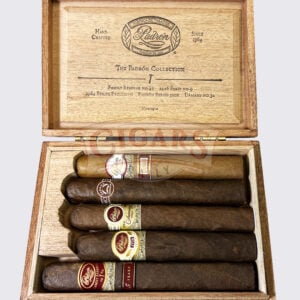
Herklots’s “standard-bearer” picks are the textbook classics: a Davidoff limited edition, a Fuente Fuente OpusX limited, and a Padrón limited. (He’d add a real Cuban “just to have one” — but warns that Cubans can ruin a collection fast if they hatch tobacco beetles, thanks to spotty quality control. So consider that one optional.)
My addition: don’t just buy one of each off the shelf. Attach a memory — a graduation, a birth, a milestone, or start a collection alongside a buddy. That’s the part no shopping list (or AI) can give you.
And if you want a cigar with real collectibility and a story built in, the Ferio Tego Summa is my pick from this whole conversation — an Ecuador Corojo-wrapped, medium-bodied smoke with pepper, spice, cedar, and baking-spice notes. Its bigger body means it’s got the runway to age gracefully.
Quick Q&A
Q: How much humidity should I store my cigars at for aging?
A: Just under 70% — Boveda 69% packs are a reliable target. Cooler and slightly drier slows aging and keeps cigars stable.
Q: Do all cigars get better with age?
A: No. Bold, full-bodied cigars have the most to gain because aging softens their sharp edges. Mild, shade-wrapped cigars are usually best smoked fresh.
Q: What’s the best humidor for a long-term collection?
A: A sealed weather-tight tub with Boveda packs in a cool, dark room. It’s more stable than many pricier options for long aging.
Q: Should I collect rare cigars or ones tied to memories?
A: Memory-based collecting tends to be more rewarding. Chasing trophies you’ll never smoke mostly just fills space — buy cigars you’ll actually enjoy and share.
Q: Will a mild Connecticut cigar improve if I age it?
A: Not really. It’s already near its mellowest point and will only soften further, so smoke it sooner.