Get FREE Domestic Shipping On Orders Over $79.99!


FDA Hostage Situation At The HQ

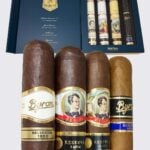
In our 4th of July episode from the Cigars Daily HQ, an American Viking order got held at Phoenix International by the FDA — an unusual move given that premium handmade cigars now sit in a different regulatory category after the deeming rule was struck down. The hold cleared within a day. We also unbox the CAO Flathead Cut & Light Station (a retro gas-pump cut-and-light unit) and, for America’s 250th birthday, light up the Espinosa La Bomba Warhead Independence Day 250.
Why was a cigar order held by the FDA?
This one caught me off guard. My American Viking order landed at Phoenix International, and instead of the usual “come pick it up,” my importer called to say the FDA had placed a hold on it. In more than a decade of doing this, that’s not something I run into — and my importer said the same. His read: after a judge ruled against the FDA’s deeming order, the agency lost a chunk of the regulatory position it had given itself. Premium handmade cigars are now classified in their own way, to the point where he said the FDA couldn’t even open the boxes to review them without a warrant.
I’m not a lawyer, and neither is he, so take this as a firsthand account rather than legal guidance. The practical outcome: for a day I could physically take possession of the order but couldn’t do anything with it — and then it cleared entirely the next morning. The bigger lesson is that the paperwork-and-borders side of this hobby is invisible to most of us right up until it isn’t.
Why do factory cigar orders take so long?
If you’ve ever wondered why a boutique release takes months, here’s the honest version. When I order directly from a factory in Estelí, Nicaragua, they roll the cigars to order — nothing is sitting on a shelf. That’s typically a three-to-four-month timeline. It’s very different from a shop ordering from a large manufacturer’s just-in-time inventory (think AJ Fernandez, Plasencia, or Oliva), where a Miami warehouse can turn an order around in days.
On top of the roll time, there’s logistics: Estelí has no airport or freight service of its own, so cigars travel about two and a half hours south to Managua, then fly to the U.S. Add cross-border communication and language barriers, and “when will it ship?” becomes the hardest question to answer. Over the last month, Nicaragua also saw shipping slowed by bureaucratic paperwork — a first, in my experience, compared to the protests and highway blockages of years past. It appears to be leveling out.
Is the CAO Flathead Cut & Light Station worth it?
The other star of the episode was a pallet that turned out to be the CAO Flathead Cut & Light Station — essentially a retro gas pump built for a cigar lounge. It’s roughly the size of a real pump, with a light-up CAO Flathead header, a bank of cutters (V, straight, and punch) where you’d swipe a credit card, a spot to nest and charge your phone, and a built-in torch shaped like the pump nozzle.
My honest take, delivered good/bad/ugly with Terrence from the shop:
- Good: It’s kitschy, eye-catching, and fun. It’s a genuine conversation piece, and it rolls on hidden wheels so you can move it anywhere.
- Bad: It eats space, and that torch drinks butane. There’s also only one of each cutter, which is tight for a busy lounge.
- Ugly (Terrence’s word): The retro 1950s pin-up styling isn’t for everyone.
The real caution is the torch. Even on its lowest setting the flame only drops from about six inches to four — far bigger than anything you should light a cigar with. That’s exactly why I made a warning sign for the empty display panel: “This torch respects nothing. Cut, light, and keep your face at a safe distance.” If you meet one of these in the wild, turn it down and go slow.
Quick terms for newcomers: a torch lighter uses pressurized butane for a hot, focused flame (great for wind, easy to over-toast a cigar); a punch, V-cut, and straight cut are three different ways to open the closed “cap” end so you can draw smoke.
Are holiday-themed cigars worth buying?
I’ll be honest: I usually pass on holiday-themed cigars. A lot of them lean on the occasion more than the blend. There are exceptions I respect — Tatuaje’s Creature Series is a genuinely fun Halloween tradition — but I don’t reach for themed sticks by default.
America’s 250th birthday felt like a real reason to make an exception. So this 4th of July I’m lighting the Espinosa La Bomba Warhead Independence Day 250, a full-bodied, high-strength smoke built for the occasion. If you’re new here: “full-bodied” describes the intensity and weight of the flavor and nicotine, not just how it tastes — it’s a lot of cigar, so pair it with food and take your time.
The real story: what cigar makers go through
Underneath the FDA drama and the gas-pump torch, the thing I keep coming back to is resilience. That’s why my American Viking line is called the Unkillable — it’s named for exactly the trait cigar makers need. They wake up to shipping holds, paperwork, and border problems, and still deliver an incredible experience into your hands. When you relax with a cigar on a day off, it’s worth a thought for the people who made it possible. It makes every cigar mean a little more.
Quick Q&A
Q: Can the FDA hold a premium cigar shipment? A: In our case a hold was placed at import, but it cleared within a day. After the deeming rule was struck down, premium handmade cigars sit in a distinct regulatory category, and my importer believed the boxes couldn’t be opened for review without a warrant. This is a firsthand account, not legal advice.
Q: Why do direct-from-factory cigars take months? A: They’re rolled to order rather than pulled from stock — usually three to four months — plus overland transport from Estelí to Managua and an international flight.
Q: What is the CAO Flathead Cut & Light Station? A: A gas-pump-styled lounge unit with multiple cutters, phone charging, and a built-in butane torch. It’s a limited-placement piece, not a retail product.
Q: What cigar is good for the 4th of July? A: We’re smoking the Espinosa La Bomba Warhead Independence Day 2:50 — a full-strength commemorative release for America’s 250th.
Q: Is a torch lighter safe for lighting cigars? A: A torch works well but runs hot; keep the flame low, hold the cigar above (not in) the flame, and toast slowly to avoid scorching the wrapper — or your face.