Get FREE Domestic Shipping On Orders Over $79.99!

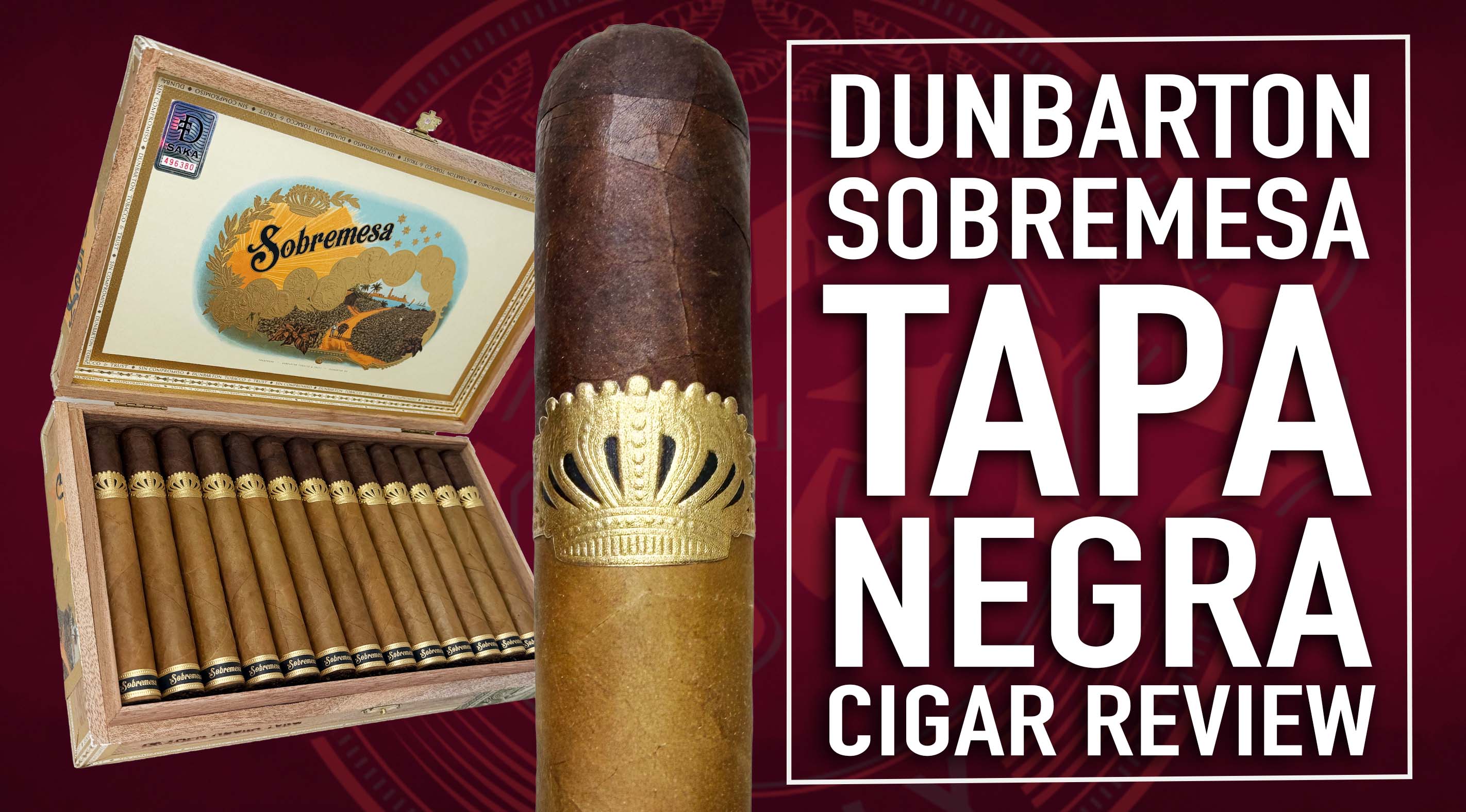
Dunbarton Sobremesa Tapa Negra Review: Two Wrappers, One Wild Ride

Hey everybody, I’m Tim, and today I’m lighting up one of the most interesting new cigars to come out of the Dunbarton world: Dunbarton Sobremesa Tapa Negra.


A little over a decade ago, when I first got into the cigar industry, the boutique cigar world was exploding. There were new cigar makers everywhere, and a lot of them had short, punchy names like HVC, JRE, or LFD. Then there was this guy named Steve Saka who came out with a brand called Dunbarton Tobacco & Trust, which at the time felt like a needlessly complicated name. But the guy behind it had one blend on the market, Sobremesa, and fast forward about 11 years and dear God, Steve Saka has once again proven himself to be one of the most knowledgeable people in the cigar world.
What has always stood out about Steve is that he does innovation with a reason. A lot of cigar makers will take an existing cigar, throw a different wrapper on it, and call it new. There’s nothing wrong with that. But when Dunbarton Tobacco & Trust releases something, there is usually a very specific purpose behind the project. That is exactly what we have here with Sobremesa Tapa Negra.
What Makes Tapa Negra Different?
The name Tapa Negra tells you what this cigar is all about. “Tapa” means cap or lid, and “negra” points to the darker wrapper leaf at the head of the cigar. The body of the cigar uses the same Ecuadorian Connecticut Shade G2BW wrapper that defines Sobremesa Brûlée, but the cap and the last portion of the cigar are finished in a darker Nicaraguan Sun Grown leaf.
That means this is not your typical barber pole cigar. In a barber pole, two wrappers spiral around the cigar from foot to head. Here, the wrapper change is segmented. The first two-thirds smoke like a Connecticut-shade-driven experience, while that final darker section promises something totally different once the burn reaches it. The concept goes back to an older technique Steve first encountered while working with Lew Rothman in the late ’90s, and now he’s applying it to the Sobremesa family.
The whole idea is to give you two different cigar experiences in one smoke. Or at least that’s the promise. So I wanted to find out whether Sobremesa Tapa Negra actually delivers a real transition, where it lands next to the rest of the Sobremesa lineup, and whether this is just a novelty or a serious cigar. And the only way to find out is with a cut and a light.
The Light Up: Bright, Peppery, and Immediately Interesting
Right from the kickoff, Sobremesa Tapa Negra is unique. I’ve been through a tremendous amount of Sobremesa Solita, Sobremesa Brûlée, Sobremesa Brûlée Blue, Wagashi, and Sobremesa Solita Red. This thing stands on its own.
It starts at medium-plus strength right out of the gate, which is not what a lot of people expect when they see Connecticut shade on the outside. But that is the trick of this cigar. It has Connecticut elements, but it is not just a Connecticut cigar. The first puffs bring black pepper through the retrohale, pepper on the tongue, and some espresso. Then all of that gets balanced by milder notes of cedar and this beautiful sweet citrus right on the tip of the tongue.
That is what makes the flavor so compelling. It is not a linear dark profile with coffee, leather, chocolate, and nothing else. It pulls from different arenas. You get cedar and citrus sitting across from espresso and pepper, and somehow it all works together. It is vivid, robust, and immediately flavorful.
The First Third: Consistency With Serious Tobacco Underneath
The first third keeps a very comparable profile to the light up, and that is a high-value thing. Some cigars need time to develop before they really start giving flavor. Sobremesa Tapa Negra is ready to go almost immediately.
Underneath the two-wrapper presentation, the cigar is rolled at Joya de Nicaragua and built with a Mexican Matacapan negro de temporal binder over a very specific Nicaraguan filler recipe. We’re talking Condega C-SG, Pueblo Nuevo criollo, La Joya Estelí C-98, and ASP Estelí hybrid ligero. If that sounds like a complicated tobacco grocery list, here’s what it means in plain English: Steve Saka painstakingly selected a bunch of very specific tobaccos to make this blend work.
Through the first third, those Nicaraguan fillers punch through with medium-plus strength. The pepper from the light up falls back just a bit, maybe sitting around a two or three out of ten on the spice scale. But the citrus sweetness, cedar, espresso, and low pepper spice remain very consistent. It is dynamic, complex, and already telling me this is not just a pretty-looking cigar.
The Second Third: Brightness Takes Over
At the halfway mark, the flavor begins to shift. There is no colossal transition yet, but the balance changes. In the first third, the citrus, cedar, pepper, and espresso all sat in pretty even balance. In the second third, that citrus note moves to the front of the flavor profile.
What is bizarre, in a really good way, is the way this cigar creates a rugged expression of flavor while still producing creaminess on the retrohale. That is not something I always find in the same cigar. It has the heartiness of sun-grown tobacco mixed with the softer character of Connecticut shade, and the result is simply bright. If I had to sum up the second third in one word, that would be it: bright.
The presentation helps sell the experience too. Sobremesa Tapa Negra is elegant in its simplicity. You can put it next to a regular Sobremesa Solita and know the difference ten times out of ten because that two-tone wrapper is unmistakable. It visually promises a transition, and by this point I was watching closely to see whether that darker final section would actually deliver.
The Final Third: The Promise Pays Off
In the final third, true to the promise of the cigar, there is a major transition in flavor. Holy cow.
Before anything else, the finish deserves attention. All the way through, this cigar has a very clean finish. Once the smoke is gone, there is still cleanliness on the palate. In the final third, that ruggedness lands on the tongue a little more, but not in a bad way. The flavor turns darker with coffee, espresso, and cacao. I do not want to call the cacao bitter, because bitter has a bad connotation, but there is a tart, defined edge to it that stays clean and enjoyable.
The citrus and cedar fade away, and the cigar becomes a darker medium-plus experience. Even down near the burn line, it does not get hot or nasty, which is something I look for more and more in a quality cigar these days. A well-rolled cigar should burn evenly and smoothly into the final third, and this one does.
By the end, Sobremesa Tapa Negra became my favorite Sobremesa cigar. After this, I’d probably put Sobremesa Solita Red right behind it, but for a regular-production release from Dunbarton Tobacco & Trust, this is a big, fat win.
Final Score and Pairings
My final smoking time was 1 hour and 26 minutes, and my score came out to a 91.
For pairings, I would absolutely put Sobremesa Tapa Negra with coffee in the morning, espresso midday, or a good bourbon later in the day. I would avoid anything overly sweet that might clash with the citrus note, but a balanced bourbon could work beautifully.
If you have smoked Dunbarton Sobremesa Tapa Negra, I want to hear what you think. Did you get the same citrus, cedar, espresso, pepper, coffee, and cacao notes? Or did your palate take you somewhere else entirely? Drop your thoughts in the comments, and you can always find Sobremesa Tapa Negra at daily low prices on CigarsDaily.com, your neighborhood cigar shop online.